Free Easy Circus Popcorn Baby Blanket Crochet Pattern
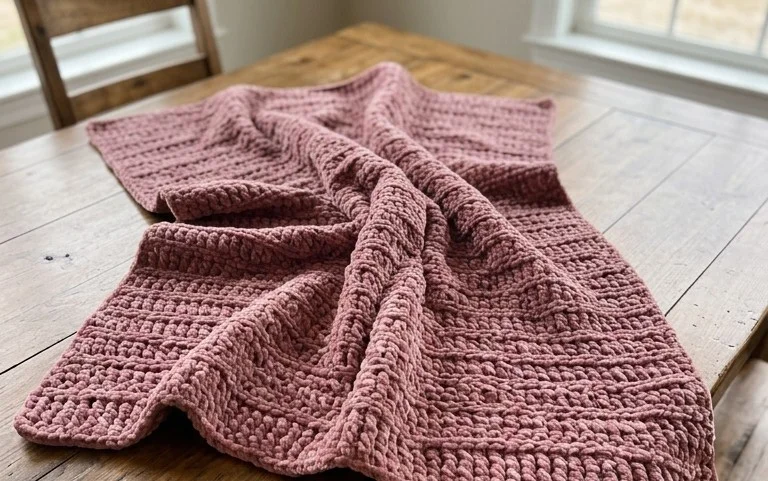
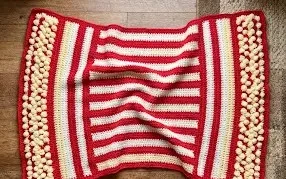
Raised popcorn stitches give this baby blanket a soft, bumpy texture, while circus-inspired colors bring a cheerful look to a crib or nursery chair. The finished fabric feels cozy and has enough visual detail to make a handmade gift feel special without relying on complicated colorwork. Beginners can take their time learning the popcorn stitch, and experienced crocheters can enjoy watching the textured rows build into a lively blanket. This pattern article walks you through the stitch technique and the details that help keep your rows even. You’ll also find guidance for choosing yarn and colors, checking your work as you go, and finishing the edges neatly. It’s a satisfying project for a baby shower gift or a colorful addition to a little one’s room.
Why You’ll Love This Pattern
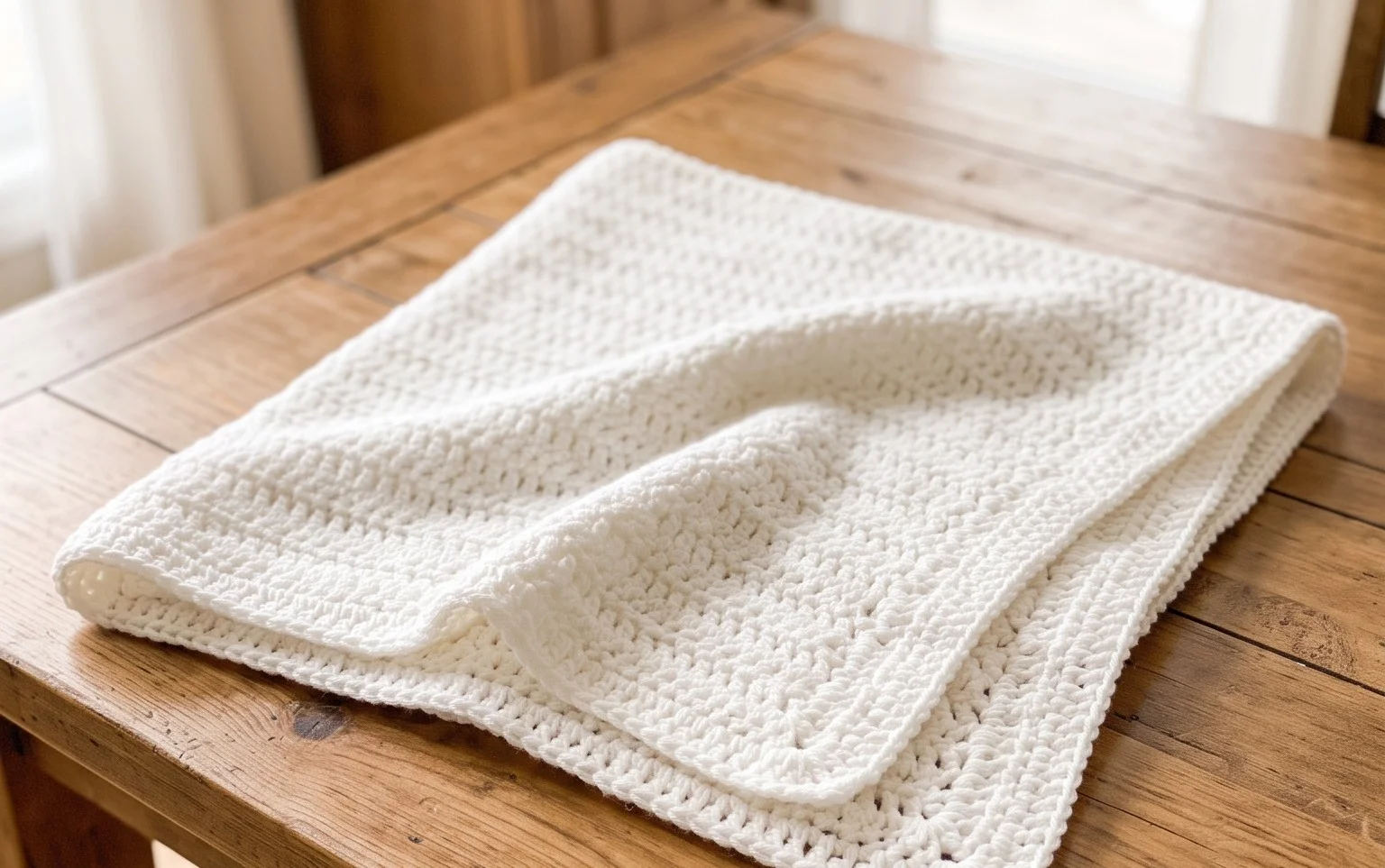
A firm cotton stitch makes this dishcloth useful for wiping counters, washing dishes, or keeping beside the sink. The pattern uses single crochet in straight rows, so you can focus on even edges and steady tension rather than learning a complicated stitch.
- The 30-stitch width makes a manageable project that can fit into a few quiet evenings.
- Worsted cotton is absorbent and washable, and a partial skein is often enough.
- The plain fabric is easy to count, which makes this a good first project for practicing consistent rows.
- A finished cloth is a practical handmade gift that can be folded and tied with a reusable ribbon.
The rows were easy to follow, and I had a useful dishcloth finished before the weekend was over.
— Maya, beginner crocheter
Pattern Overview & Skill Level
- Skill Level: Beginner. You need to know how to chain and single crochet.
- Approximate Time: About 2–3 hours, depending on your pace and tension.
- Construction: A flat rectangle worked back and forth in rows, then finished by weaving in the yarn tails.
- Finished Dimensions & Sizing: About 8.5 x 7.5 in (21.5 x 19 cm) after washing and drying flat. The pattern has 30 stitches across and 30 rows.
To check your gauge, crochet a small single-crochet swatch. Aim for 14 stitches and 16 rows over 4 in (10 cm). The finished cloth may be slightly larger or smaller if your gauge differs.
Materials & Supplies Needed
- Yarn: About 90 yd (82 m) of worsted-weight (#4) cotton yarn. Use one color, or use a contrasting color for the starting and finishing tails if you prefer a striped cloth.
- Hook Size: 5.0 mm / H-8. Check your gauge and change hook size if needed.
- Notions: Tapestry needle for weaving in ends, scissors, and a ruler or tape measure.
- Substitutions: Choose 100% cotton or a cotton-rich yarn made for frequent washing. A thinner yarn makes a smaller, lighter cloth; a thicker yarn makes a larger, denser cloth and uses more yarn. Acrylic is less absorbent, so it may not work as well for dishwashing.
Stitch Guide & Abbreviations (US Terms)
- ch = chain.
- sc = single crochet: insert hook into the stitch, yarn over and pull up a loop, yarn over and pull through both loops.
- st / sts = stitch / stitches.
- rep = repeat.
The turning chain does not count as a stitch. Work the first single crochet of each row into the first stitch, directly beside the turning chain. This keeps the sides straight.
Step-by-Step Pattern Instructions
Dishcloth Body
- Row 1: Ch 31. Sc in the second ch from the hook and in each ch across. (30 sts)
- Row 2: Ch 1, turn. Sc in each st across. (30 sts)
- Row 3: Ch 1, turn. Sc in each st across. (30 sts)
- Row 4: Ch 1, turn. Sc in each st across. (30 sts)
- Row 5: Ch 1, turn. Sc in each st across. (30 sts)
- Row 6: Ch 1, turn. Sc in each st across. (30 sts)
- Row 7: Ch 1, turn. Sc in each st across. (30 sts)
- Row 8: Ch 1, turn. Sc in each st across. (30 sts)
- Row 9: Ch 1, turn. Sc in each st across. (30 sts)
- Row 10: Ch 1, turn. Sc in each st across. (30 sts)
- Row 11: Ch 1, turn. Sc in each st across. (30 sts)
- Row 12: Ch 1, turn. Sc in each st across. (30 sts)
- Row 13: Ch 1, turn. Sc in each st across. (30 sts)
- Row 14: Ch 1, turn. Sc in each st across. (30 sts)
- Row 15: Ch 1, turn. Sc in each st across. (30 sts)
- Row 16: Ch 1, turn. Sc in each st across. (30 sts)
- Row 17: Ch 1, turn. Sc in each st across. (30 sts)
- Row 18: Ch 1, turn. Sc in each st across. (30 sts)
- Row 19: Ch 1, turn. Sc in each st across. (30 sts)
- Row 20: Ch 1, turn. Sc in each st across. (30 sts)
- Row 21: Ch 1, turn. Sc in each st across. (30 sts)
- Row 22: Ch 1, turn. Sc in each st across. (30 sts)
- Row 23: Ch 1, turn. Sc in each st across. (30 sts)
- Row 24: Ch 1, turn. Sc in each st across. (30 sts)
- Row 25: Ch 1, turn. Sc in each st across. (30 sts)
- Row 26: Ch 1, turn. Sc in each st across. (30 sts)
- Row 27: Ch 1, turn. Sc in each st across. (30 sts)
- Row 28: Ch 1, turn. Sc in each st across. (30 sts)
- Row 29: Ch 1, turn. Sc in each st across. (30 sts)
- Row 30: Ch 1, turn. Sc in each st across. (30 sts)
Finishing
Cut the yarn, leaving a tail of about 6 in (15 cm), and pull it through the final loop to secure it. Thread the tail onto a tapestry needle and weave it through several stitches on the wrong side. Weave in the starting tail the same way. Avoid pulling the tails tight enough to pucker the fabric.
Care & Washing Instructions
- Wash cotton in cool or warm water, up to 40°C (104°F), with similar colors.
- Dry flat or tumble dry on low if the yarn label allows it.
- Reshape the damp cloth by hand and smooth the edges flat; follow the yarn label if its care directions differ.
Pro Tips & Common Mistakes to Avoid
- Keep your turning chain loose enough to work into the first stitch, but do not count it as a stitch. Tight turning chains can pull the sides inward.
- Count the stitches at the end of each row. If you have 29 or 31, check whether you skipped the first stitch or accidentally worked into the turning chain.
- Use a tapestry needle to weave each tail through the back of several stitches, then change direction once before trimming. This helps keep ends secure through washing.
- For a wider or longer cloth, add chains to the foundation or work extra rows. Each added foundation chain adds one stitch, and more stitches or rows increase the yarn needed.
Frequently Asked Questions
Can I use a different yarn fiber?
Yes. Cotton is a good choice because it absorbs water and can tolerate frequent washing. A cotton-linen blend may feel firmer, while acrylic is less absorbent. Check the yarn label and make a gauge swatch, since a different fiber can change the cloth’s size and feel.
How can I make the dishcloth larger or smaller?
For a wider cloth, begin with more or fewer chains, keeping one chain for the turning chain and the rest for your stitches. Add or remove rows to change the length. Changes to either dimension affect yarn use, so have extra yarn available if you enlarge it.
Is this pattern suitable for a first crochet project?
Yes. It uses only chains and single crochet, with no shaping or joining. Practice the stitch on a small swatch first, then check that every row has 30 stitches to keep the rectangle even.
May I sell dishcloths made from this pattern?
You may sell finished items if the designer’s terms allow it. Check the pattern’s stated permissions, and write your own product description and photos rather than presenting the pattern itself as your work.
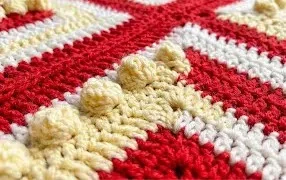
Seeing the raised popcorn stitches come together in a bright, cozy blanket is a lovely reward for the time you put into each row. You can keep the circus-inspired palette or choose two or three softer shades to suit a nursery; a washable baby-friendly yarn makes either version easier to care for. When your blanket is finished, share a photo on Pinterest or your favorite social media account so other crocheters can see your colors and texture. If you enjoyed this project, browse the blog for more free crochet patterns, including blankets and thoughtful handmade gifts. Keep your notes with the finished piece so you can remember the yarn and color choices if you make another one.