Macchiato Wreath Tree Skirt: Easy Free Crochet Pattern
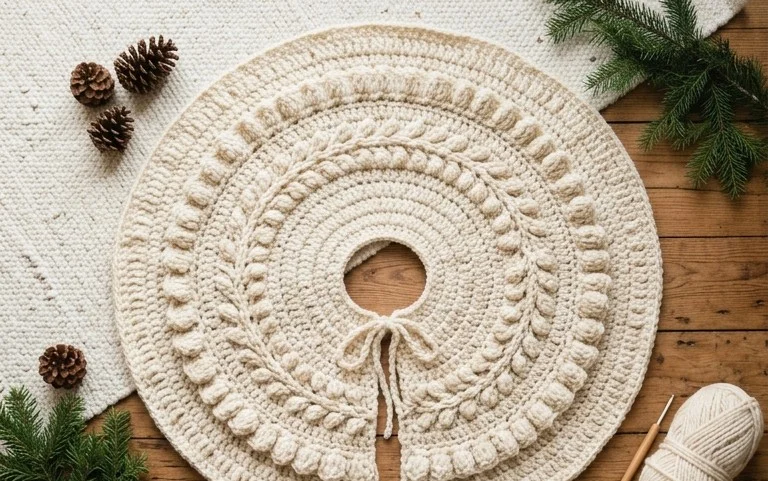
A crocheted tree skirt gives the base of a holiday tree a soft, finished look, and this wreath-inspired design adds a handmade detail to the floor beneath the branches. The Macchiato pattern has a cozy, textured feel that suits a living room tree, a smaller tabletop display, or a thoughtful gift for someone who enjoys seasonal decor. It can be a satisfying project for beginners ready to practice consistent stitches, as well as for experienced crocheters who want a relaxed make between larger projects. As you work, you’ll learn how the stitch repeats and shaping build the skirt’s circular form. The pattern also gives you a chance to plan your yarn colors and finish a useful decoration you can bring out each year.
Why You’ll Love This Pattern
A firm cotton fabric and simple single crochet stitches make this washcloth useful for everyday dishes, counters, or a quick face wash. The pattern is worked flat in straight rows, so you do not need to join rounds or keep track of shaping. It is a practical first project for learning to keep an even edge, and the small square is easy to finish in a few relaxed sessions.
One crocheter who finished the cloth described it this way:
The stitch pattern was easy to follow, and counting each row helped me keep the sides straight. I made mine during a couple of evenings and use it at the kitchen sink.
— Anna, beginner crocheter
Pattern Overview & Skill Level
- Skill Level: Beginner. You need to know how to chain and single crochet.
- Approximate Time: About 2–3 hours, depending on your pace and how often you check your stitch count.
- Construction: A flat square worked back and forth in rows, with no separate pieces or seams.
- Finished Dimensions & Sizing: Approximately 7.75 × 7.75 in (19.5 × 19.5 cm) before washing, using the gauge below. Cotton may relax slightly after its first wash.
Check gauge before starting if you want a particular finished size. In single crochet, 4 stitches and 4 rows should measure about 1 in (2.5 cm). The stitch count and row count make a compact cloth, while the cotton yarn gives it enough body for regular use.
Materials & Supplies Needed
- Yarn: About 85–100 yd (78–91 m) of worsted-weight cotton yarn, #4, in one color. Choose 100% cotton for absorbency and heat tolerance around ordinary kitchen use.
- Hook Size: 5.0 mm / H-8 crochet hook. Use a size that helps you match gauge; a tighter crocheter may need to go up one hook size.
- Notions: Tapestry needle for weaving in the tail, scissors, and a ruler or tape measure. A removable stitch marker can help mark the first stitch of a row.
- Substitutions: Cotton-linen yarn can make a slightly firmer cloth, while a cotton-bamboo blend usually feels softer and drapes more. Keep the yarn close to worsted weight and check gauge; a thicker yarn or larger hook will make a larger, looser cloth and use more yarn. Avoid acrylic for a cloth intended for hot cookware.
Stitch Guide & Abbreviations (US Terms)
- ch = chain.
- sc = single crochet. Insert the hook into the stitch, yarn over and pull up a loop, yarn over again, and pull through both loops.
- st = stitch; sts = stitches.
- rep = repeat.
The turning chain at the start of each row does not count as a stitch. Work the first single crochet into the first stitch, not into the turning chain. This keeps the sides straight and the stitch count at 31 for every row.
Step-by-Step Pattern Instructions
Use the same hook throughout. The turning chain gives you room to turn without adding height to the edge. Count the stitches after each row, especially the first few, to confirm that no stitch has been skipped at either side.
Washcloth
- Foundation: Ch 32. Keep the chain loose enough for the hook to enter easily.
- Row 1: Sc in the second ch from the hook and in each ch across. Turn. (31 sts)
- Row 2: Ch 1, sc in each st across. Turn. (31 sts)
- Rows 3–31: Rep Row 2. At the end of Row 31, you will have worked 31 rows in total. (31 sts)
Fasten off, leaving a tail long enough to weave in comfortably. Pull the tail through the final loop. Thread it onto a tapestry needle and weave it through several stitches on the wrong side, changing direction once so it is less likely to work loose. Trim the remaining yarn close to the fabric without cutting a stitch. The cloth is ready to use after any loose fibers have been removed.
Care & Washing Instructions
- For 100% cotton yarn, machine wash with similar colors in warm water, up to 40°C (104°F), or follow the yarn label if it gives a lower limit.
- Lay the cloth flat to dry, smoothing the edges while it is damp; avoid high dryer heat, which can shrink cotton.
- Reshape it flat after washing. If the edges curl, pin the damp cloth to its stated dimensions until dry rather than stretching it while wet.
Pro Tips & Common Mistakes to Avoid
- Keep your turning chain consistent and avoid pulling it tight. A tight chain can make the row ends shorter than the body of the cloth.
- Count 31 stitches at the end of every row. Place a marker in the first stitch if you often miss the edge stitch; this pattern is worked in rows, not rounds.
- When weaving in the tail, pass the needle through the back of several stitches and change direction. Do not pull so tightly that the fabric puckers.
- To make a wider or longer cloth, add chains for width or work extra rows for length. Each extra foundation chain adds roughly ¼ in at the stated gauge, and extra rows increase yarn use; start with an additional 15–25 yd if you make a noticeably larger cloth.
Frequently Asked Questions
Can I use a different yarn fiber?
Yes, but cotton is the best choice for an absorbent kitchen cloth. Cotton-linen is a suitable alternative, while acrylic is less absorbent and should not be used to handle hot cookware. Different fibers can change the drape and finished measurements, so check the care label and make a small gauge swatch.
How can I make the washcloth smaller or larger?
For a smaller cloth, use fewer foundation chains and work fewer rows. For a larger cloth, add chains and rows, keeping the same number of single crochets in each row as the number of foundation chains minus one. Measure as you go and allow extra yarn for added fabric.
Is this pattern suitable for a first crochet project?
Yes. It uses only chains and single crochet, and the rows repeat without increases or decreases. The main challenge is working the first and last stitch of every row so the edges stay even. Count 31 stitches after each row until that feels comfortable.
May I sell washcloths made from this pattern?
You can sell finished items if the designer’s terms allow it. Check the terms that came with the pattern before listing or selling your work, and write your own product description rather than presenting the pattern as your design.
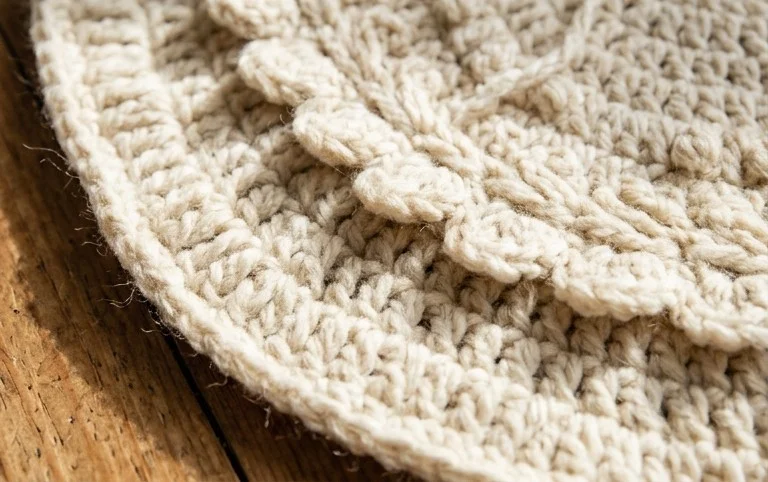
Once the last stitches are finished, your tree has a soft handmade border that makes the whole display feel more personal. The wreath-inspired texture adds detail around the base, while the skirt gives stray needles and fallen bits of tinsel a place to land. For a simple variation, use a lighter cream or a deeper coffee shade to change the look without altering the pattern. When yours is ready, share a photo on Pinterest or your favorite social platform; seeing the yarn and color choices others make is part of the fun. If you enjoyed this project, explore more free crochet patterns on the blog for another seasonal make or a practical gift.