Cozy Fingerless Crochet Mitts with a Pretty Shell Texture
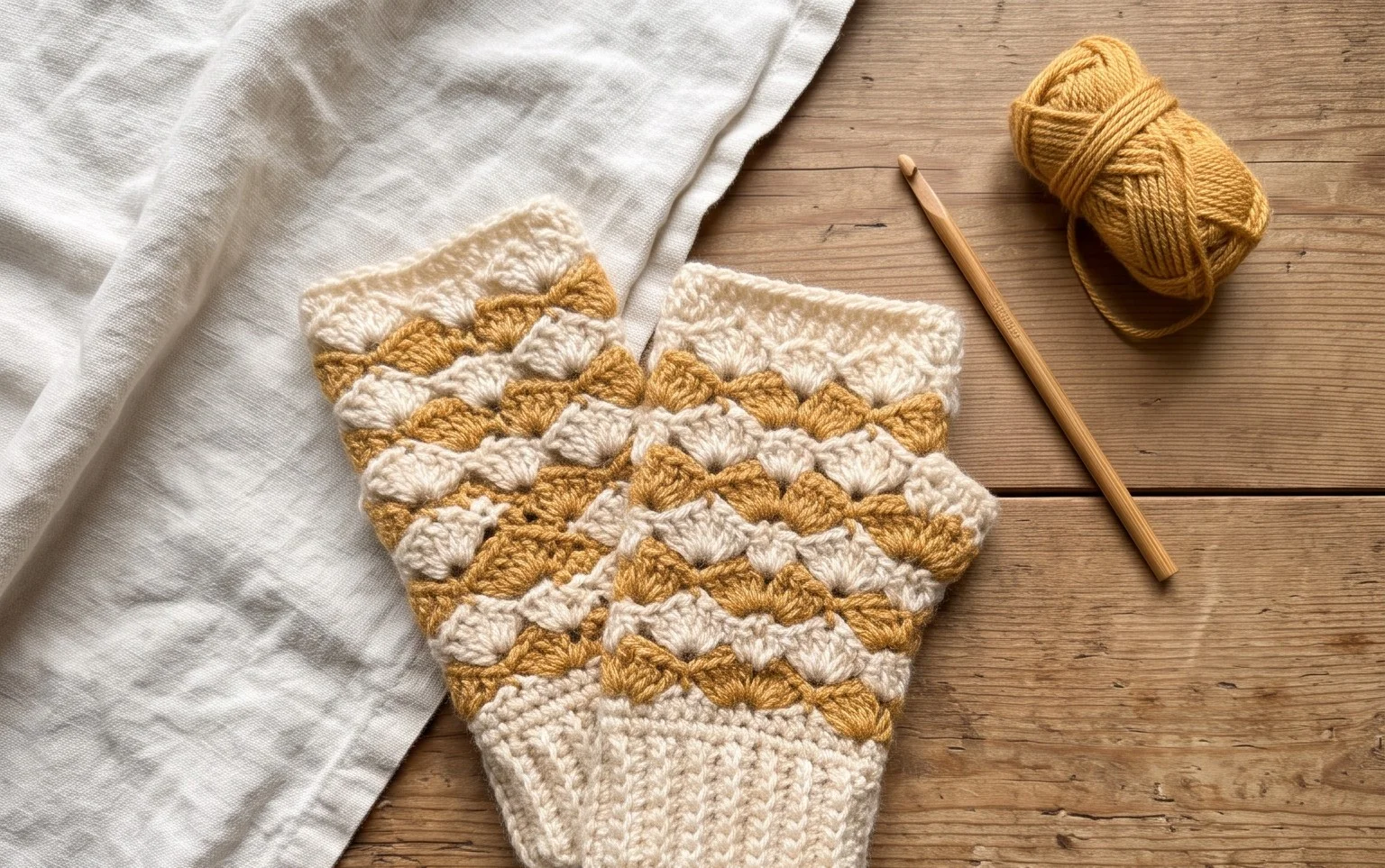
Soft yarn and rows of shell stitches give these fingerless gloves a gently scalloped texture, while the open fingers leave your hands free to type, read, or carry a mug. They add a little warmth on cool mornings without the bulk of full gloves, and their handmade look suits everyday wear as well as a thoughtful gift. The repeating stitch makes the fabric satisfying to watch grow, and the project offers beginners a chance to practice shell stitches and keep their work even. You’ll learn how the shell pattern forms the gloves’ textured surface and how to follow the pattern toward a comfortable fit. Choose a color that matches a favorite coat, or make a pair in a cheerful shade for someone who appreciates useful handmade accessories.
Why You’ll Love This Pattern
This cotton dishcloth is made in simple single crochet rows, so you can work it while learning to keep your edges straight. The finished square is useful for washing dishes, wiping counters, or keeping beside the sink, and the dense fabric holds up to regular use.
One ball of worsted cotton is usually enough, and the compact size makes the project easy to carry. The pattern uses the same stitch across every row, which gives you room to practice even tension without tracking increases or decreases. A crocheter’s note after finishing a sample: the steady rows made it easy to spot and fix a missed stitch before it affected the edges.
The rows were easy to follow, and I had a useful dishcloth finished in an afternoon.
— Anna, home crocheter
Pattern Overview & Skill Level
- Skill Level: Beginner. You should know how to chain and single crochet.
- Approximate Time: 2–3 hours, depending on your pace and how often you stop to check your stitch count.
- Construction: A flat square worked back and forth in rows, starting with a foundation chain. The turning chain does not count as a stitch.
- Finished Dimensions & Sizing: About 8 × 8 in (20 × 20 cm) when crocheted to gauge. Small differences in tension can change the final size.
Materials & Supplies Needed
- Yarn: About 75 yd (69 m) of worsted-weight (#4) 100% cotton yarn in one color. Cotton absorbs water and tolerates frequent washing. Choose a smooth yarn so the stitches are easy to see.
- Hook: 5.0 mm (US H-8) crochet hook.
- Notions: Tapestry needle for weaving in the ends, scissors, and a ruler or tape measure. A stitch marker is optional for marking the first stitch of a row.
- Substitutions: A different worsted-weight cotton is the closest match. Cotton blends may feel softer or stretchier. If you use a thinner yarn, the cloth will be smaller and may take more rows; a thicker yarn or larger hook will make a larger, looser cloth and use more yarn. Avoid fuzzy yarns, which can make the fabric harder to scrub and the stitches harder to count.
Stitch Guide & Abbreviations (US Terms)
- ch = chain.
- sc = single crochet: insert the hook into the stitch, yarn over and pull up a loop, yarn over and pull through both loops.
- st = stitch.
- sts = stitches.
- rep = repeat.
- RS = right side, the face you choose to show.
- WS = wrong side, the opposite face.
For this pattern, work the first single crochet into the first stitch after turning. The turning chain is for height only and is never counted as a stitch.
Step-by-Step Pattern Instructions
Gauge: 15 sc and 18 rows measure about 4 in (10 cm) in single crochet after gently washing and drying the swatch. Gauge is useful for matching the stated finished size; the dishcloth will still work if yours differs slightly.
Notes: Chain 1 at the start of each row and turn. Do not work into the turning chain. Count the stitches in each row, especially the first and last stitches, to keep the sides even. The total stitch count stays at 30 throughout.
Dishcloth
- Foundation: Ch 31.
- Row 1 (RS): Sc in the second ch from the hook and in each ch across. Turn. (30 sts)
- Row 2: Ch 1, sc in each st across. Turn. (30 sts)
- Rows 3–36: Rep Row 2. (30 sts per row)
After Row 36, the piece should measure close to 8 in (20 cm) square when worked to gauge. If it is noticeably shorter or longer, measure before fastening off. A small difference is fine for a dishcloth; the fabric’s stitch count should still be 30 across.
Finishing
Fasten off, leaving a tail of about 6 in (15 cm). Pull the tail through the last loop. Thread it onto a tapestry needle and weave it through several stitches on the wrong side, changing direction once so it is less likely to work loose. Weave in the foundation tail in the same way. Trim the ends close to the fabric without cutting the stitches. Smooth the cloth flat and check that the edges are not pulled inward by tight finishing tails.
Care & Washing Instructions
- Wash cotton in warm water, up to 40°C (104°F), with similar colors; follow the yarn label if it gives a lower temperature.
- Dry flat or tumble-dry on low if the yarn label allows it. Reshape the square while damp.
- Block lightly by pinning the damp cloth to an 8 in (20 cm) square and letting it dry; avoid stretching the edges.
Pro Tips & Common Mistakes to Avoid
- Keep your tension relaxed. If the foundation chain is much tighter than the rows, the bottom edge will pucker; try making the chain with a hook one size larger, then switch to the listed hook for Row 1.
- Count 30 stitches at the end of every row. A marker in the first stitch can help you find the edge stitch after turning, but move it up as you work.
- Use a tapestry needle to weave in each tail through the backs of several stitches, then change direction. Avoid tying a bulky knot, which can make the cloth uncomfortable to hold.
- For a wider cloth, add chains to the foundation and work the same number of single crochets across. Each extra chain adds about ⅙ in (4 mm) at the stated gauge; you will need more yarn, and adding rows also increases yarn use and height.
Frequently Asked Questions
Can I use acrylic yarn instead of cotton?
You can, but acrylic is less absorbent and may not feel as useful for wiping dishes. A cotton or cotton-blend yarn is a better choice for a washable kitchen cloth. Check the care label before substituting.
How can I make the dishcloth smaller or larger?
For a different width, change the foundation chain and work one single crochet into each chain after the first. For a different height, work fewer or more rows. Keep the edges straight by using the same stitch count across every row, and allow extra yarn when increasing either measurement.
Is this pattern suitable for a first crochet project?
Yes, if you can make a chain and single crochet. The main challenge is keeping 30 stitches in each row. Count as you go, and check the first and last stitch before turning so the square does not gradually narrow.
May I sell dishcloths made from this pattern?
Check the designer’s terms before selling finished items, and follow any credit or selling conditions they give. If you sell the cloth, describe its fiber and care needs accurately and do not claim a different designer’s pattern as your own.
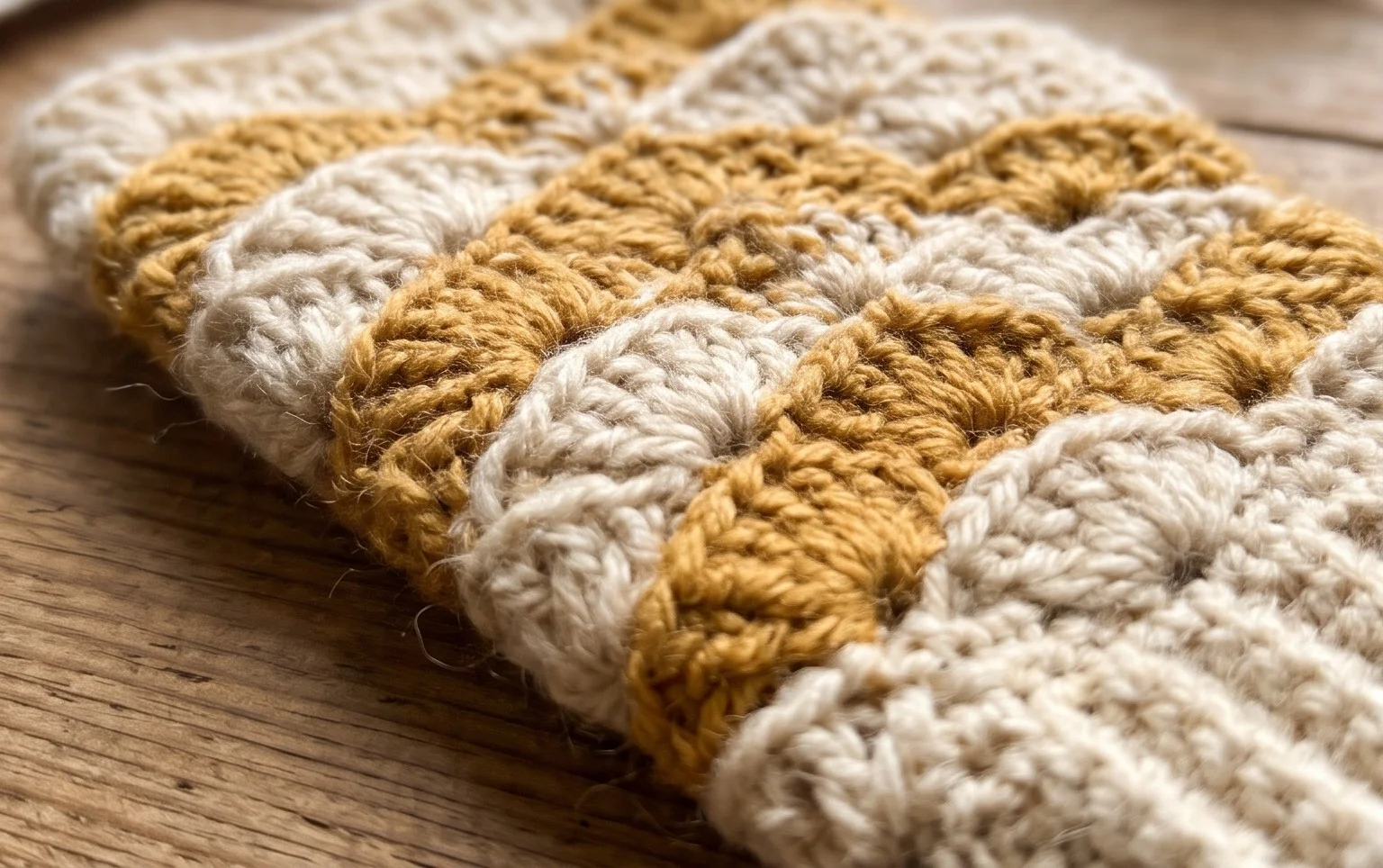
Once the last stitch is finished, you’ll have a pair of softly textured gloves that keep your palms warm while leaving your fingers free for everyday tasks. For a simple variation, try a different yarn color, such as a neutral shade for daily wear or a brighter tone for a gift. If you make a pair, share a photo on Pinterest or your favorite social media platform so other crocheters can see how your shells turned out. Then browse the blog for more free crochet patterns, including practical accessories and projects for a relaxing afternoon with your hook.